
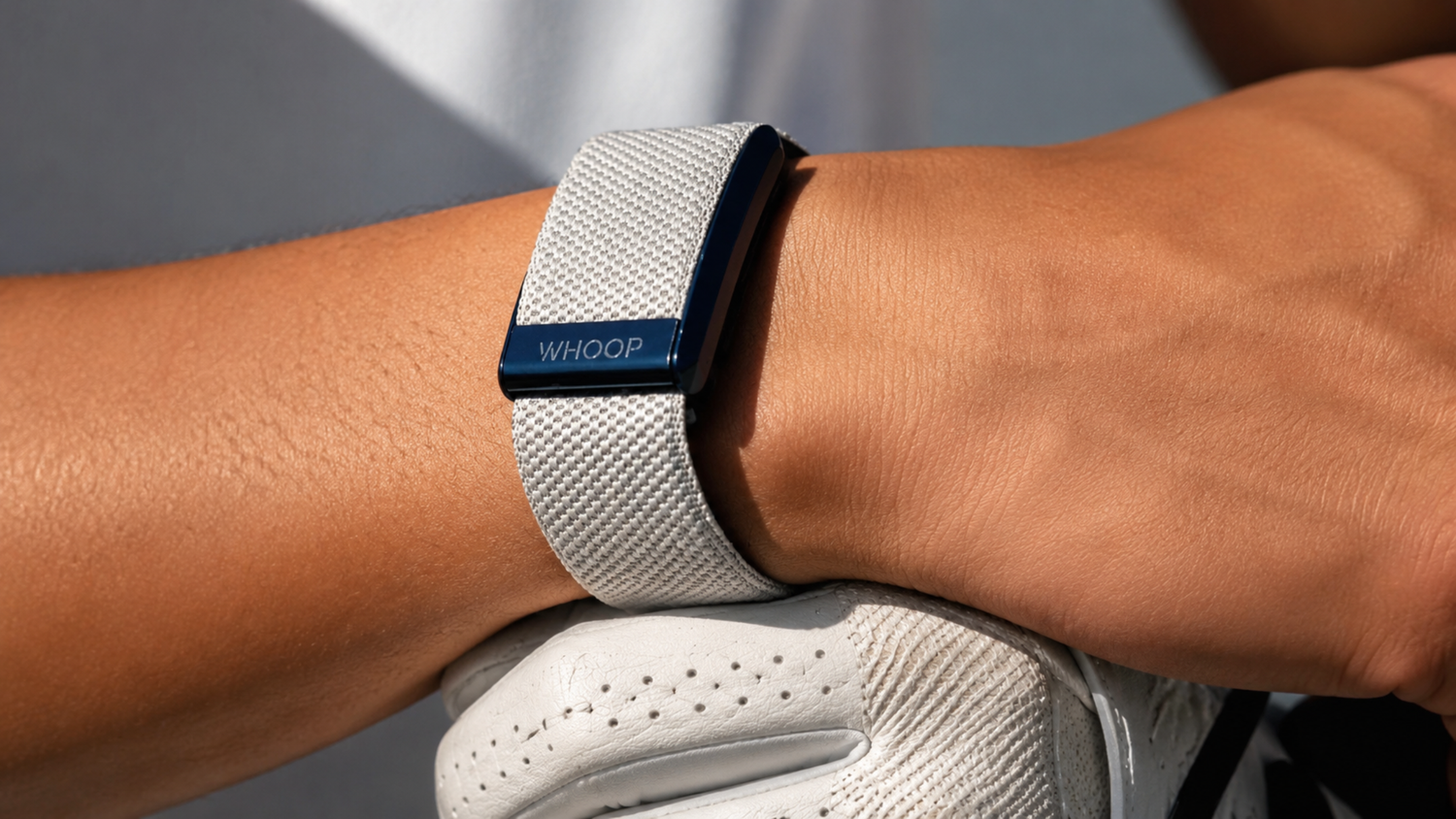
A WHOOP band is a small fitness band you wear on your wrist or arm, with no screen. It quietly watches your body all day and night, tracking your sleep, your heart rate, and how tired your body really is, and sends everything to a simple phone app.
If you've ever finished a workout feeling fine but still felt drained the next day, this is exactly the kind of thing a WHOOP band is built to catch.
What Does a WHOOP Band Actually Do?

In simple words, it tells you three things every single day:
- How well you slept: not just hours, but how deep and restful that sleep actually was
- How ready your body is: whether to push hard today or take it easy
- How much stress your body has taken: from workouts, walking, or even a rough night's sleep
There's no screen to check mid-workout. Everything lives in the app, so the band itself stays light and simple on your wrist.
WHOOP Band Benefits
- Tells you when to rest, so you don't overwork your body without realising it
- Shows real sleep quality, not just several hours
- Works day and night, light enough to wear 24 hours, including while sleeping
- Keeps things simple, with easy scores instead of confusing charts
- Tracks daily habits, letting you log things like caffeine or late meals to see how they affect your sleep and recovery
WHOOP Band Features
- Tracks heart rate continuously, all day and night
- Gives a daily recovery score based on your body's actual needs
- Measures strain, or how much stress your body has taken that day
- Battery lasts over 10 days, and can be charged while still wearing it
- Runs on a monthly or yearly membership, not a one-time purchase
Is the WHOOP Band Worth Buying in 2026?
For most casual gym-goers, probably not, especially with cheaper no-subscription options now available. A regular smartwatch, or even the new Fitbit Air, may cover your needs for less money.
But for serious athletes, people recovering from injury, or anyone who trains hard and needs precise recovery data, WHOOP still earns its price. It remains one of the most focused, well-tested tools for recovery and strain tracking, and its new clinician consultation feature adds real medical backup that budget options don't offer yet.
Buy Wearables the Right Way
If you're building out your fitness tech alongside your sneaker collection, it's worth applying the same rule to both: buy from sources that guarantee authenticity, since wearables and sneakers both attract counterfeit sellers online.
Conclusion
A WHOOP band isn't for everyone, and that's kind of the point. If you just want to check notifications or count steps, a regular smartwatch will do that job better. But if you train hard, need to know when to rest, or genuinely want to understand your sleep and recovery, it does one job really well. In 2026, that focus is exactly why serious athletes still reach for it over an all-in-one smartwatch.
FAQs
What is a WHOOP band used for, in simple words?
It tells you how tired your body is, how well you slept, and whether you should rest or push harder that day.
Is a WHOOP band hard to use?
No. You just wear it, and it tracks everything on its own. Results show up in a simple app that doesn't need technical knowledge to understand.
Do I need to pay every month for a WHOOP band?
Yes. WHOOP runs on a membership plan instead of a one-time purchase, so you pay monthly or yearly to keep using it.
Is there a cheaper alternative to WHOOP in 2026?
Yes. Google's Fitbit Air and the Amazfit Helio Strap are newer, similar bands priced around $99 with no ongoing subscription required.
Is a WHOOP band better than a normal smartwatch?
It depends on your goal. A WHOOP band focuses only on sleep, rest, and body strain, while a smartwatch handles more general things like calls, notifications, and apps.